
U.S. History – Course Design Sample
Overview
This course examines early American history through the Civil War era, with a focus on conflict, identity, and the development of regional cultures. Designed for undergraduate learners, the course emphasizes primary source analysis, place-based learning, and a structured progression from foundational knowledge to independent interpretation.
Instructional Approach
My course design centers on clarity, structure, and meaningful engagement. Each unit is scaffolded to support student growth while encouraging deeper analysis over time.
Scaffolded assignments that move from guided work to independent interpretation
Emphasis on primary sources to build historical reasoning
Discussion-based learning that prioritizes analysis over summary
Clear, consistent rubrics to support expectations and feedback
Integration of regional and environmental perspectives, including maritime and cultural history
Incorporation of applied history projects that connect academic content to real-world interpretation
Sample Learning Experience
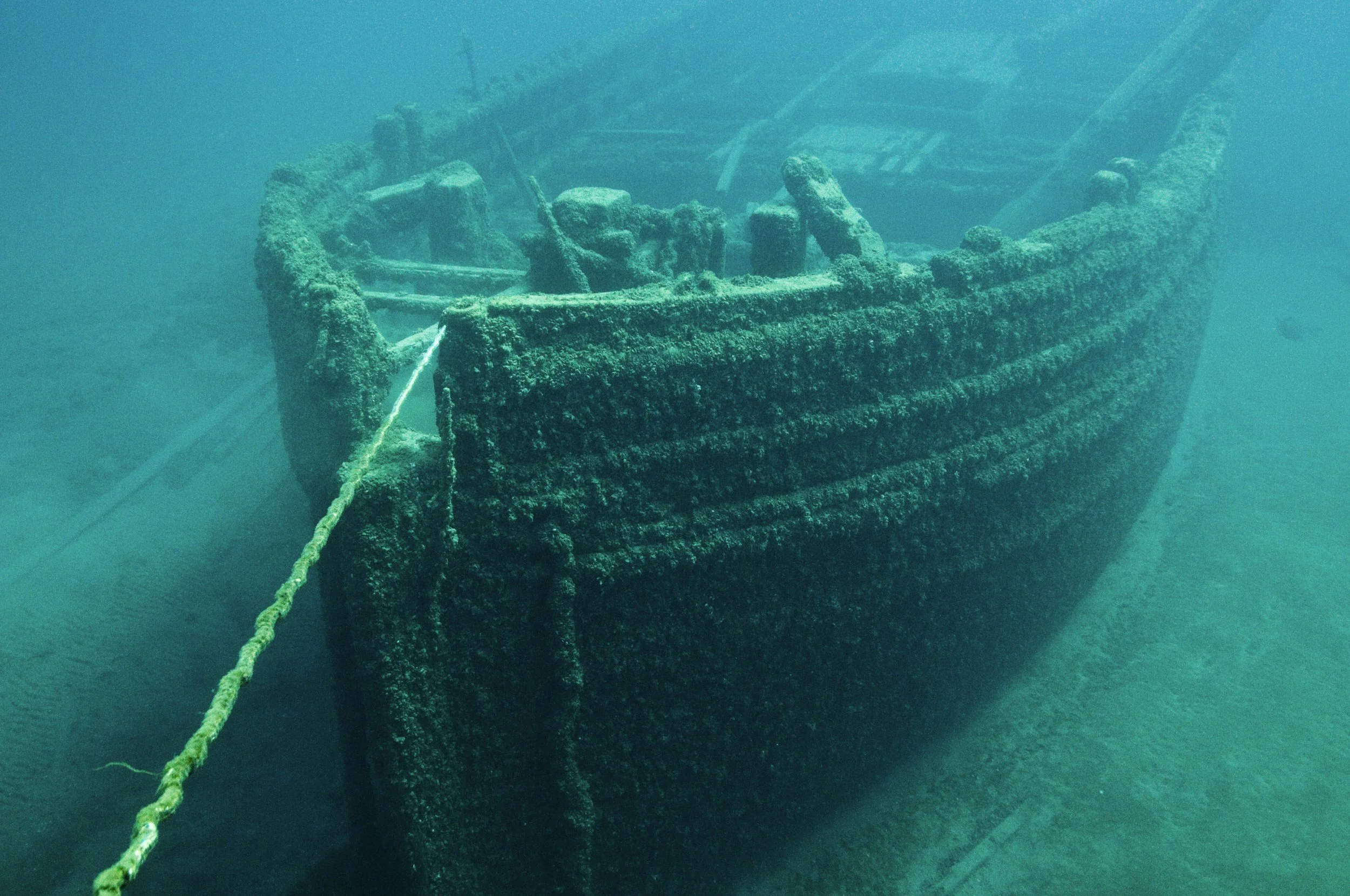
Shipwrecks & Memory: Interpreting the Past Through Place
This assignment introduces students to shipwrecks as sites of historical memory, focusing on the Great Lakes and the wreck of the Edmund Fitzgerald. Students explore how these events are remembered, interpreted, and preserved through museums, storytelling, and public history. As an applied history project, students move beyond content recall to consider how history is presented to the public and how meaning is constructed through narrative and place.
Students are asked to:
Analyze primary and secondary sources
Evaluate how memory and interpretation shape historical understanding
Connect regional events to broader national narratives
Develop a short, evidence-based written interpretation
Discussion-Based Learning
Course discussions are designed to move beyond summary and into interpretation. Students engage with guiding questions that encourage comparison, evaluation, and connection across themes.
Example Prompt:
How did regional identity shape the experiences of different groups in early America, and how do those differences challenge a single national narrative?
Assessment & Outcomes
Assessments are designed to build both content knowledge and transferable skills.
Students develop:
Historical analysis and interpretation skills
Confidence working with primary sources
The ability to construct evidence-based arguments
Strong written communication grounded in clear reasoning
An understanding of how history functions in public and applied settings
This course reflects my broader approach to teaching history as an active, inquiry-driven process
that connects academic content to lived experience and public interpretation.